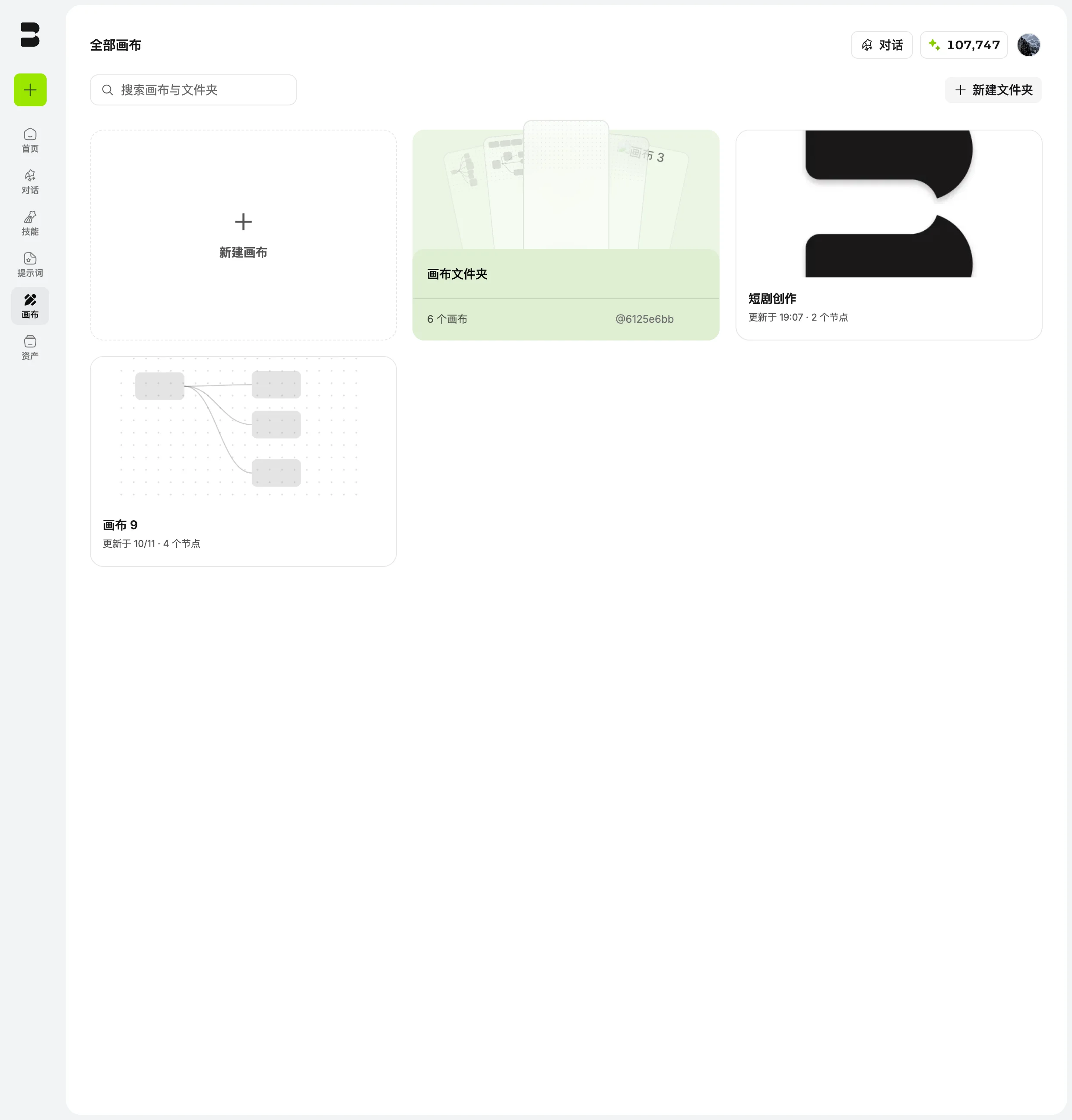
CANVAS
可视化组织创作步骤、节点与上下文。Arrange creative steps, nodes and context visually.
让 AI 创作过程看得见,让创作成果留得住。Make the AI creation process visible, and the work worth keeping.
[探索设计][EXPLORE DESIGN]向下探索SCROLL TO EXPLOREBLUETFUL / CANVAS-NATIVE AI WORKSPACE
通过可视化画布组织创作流程,结合 AI Agent、提示词、Skills 与数字资产管理。从灵感、生成、编辑到沉淀与复用,探索更加连续、可控的 AI 工作方式。Bluetful brings visual creation flows, AI Agents, prompts, Skills and digital assets together. It explores a more continuous, controllable way to move from an idea to generation, editing, preservation and reuse.
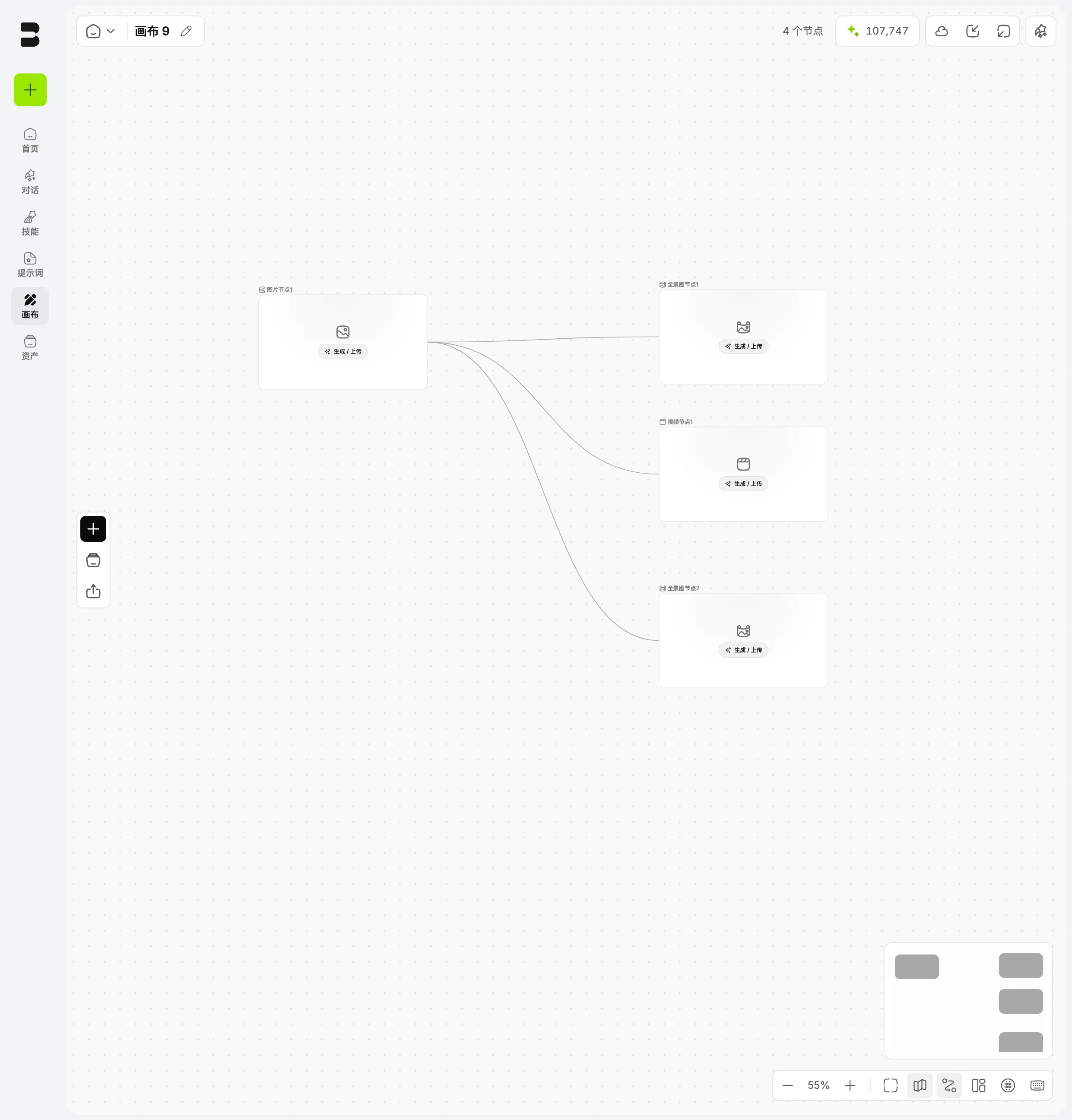
可视化组织创作步骤、节点与上下文。Arrange creative steps, nodes and context visually.
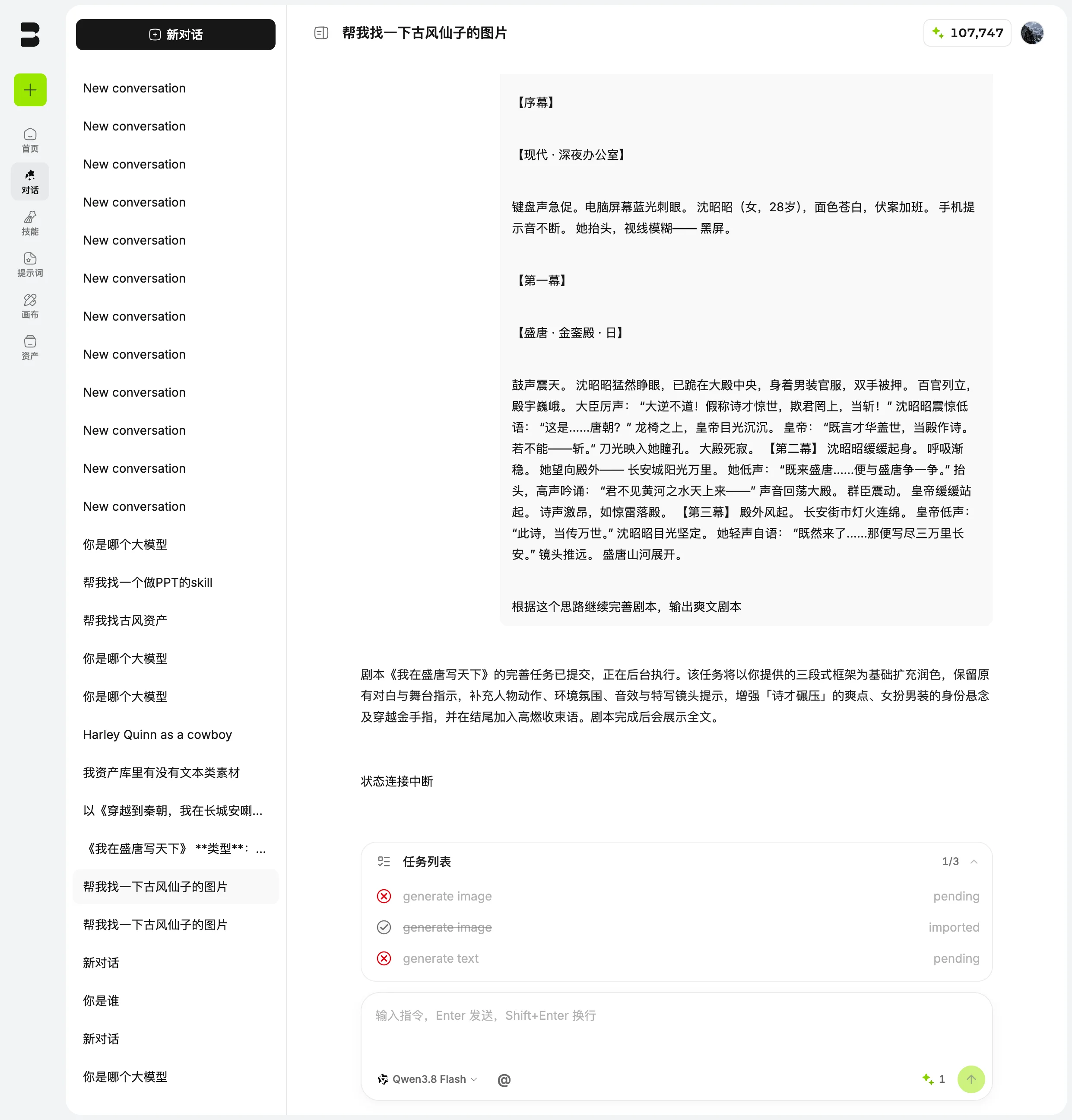
理解任务,在授权范围内调用工作台能力。Understand tasks and use workspace tools with permission.
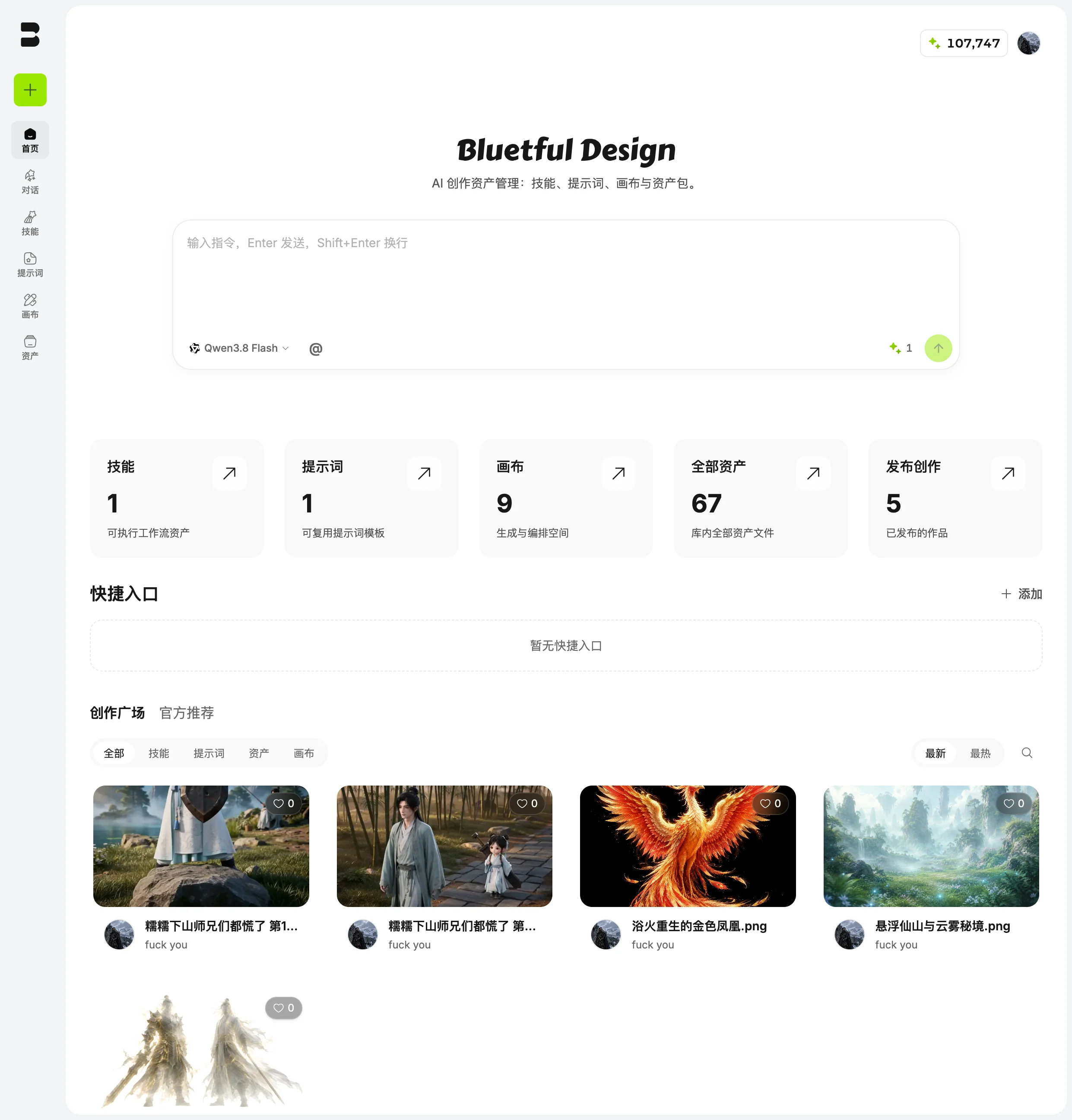
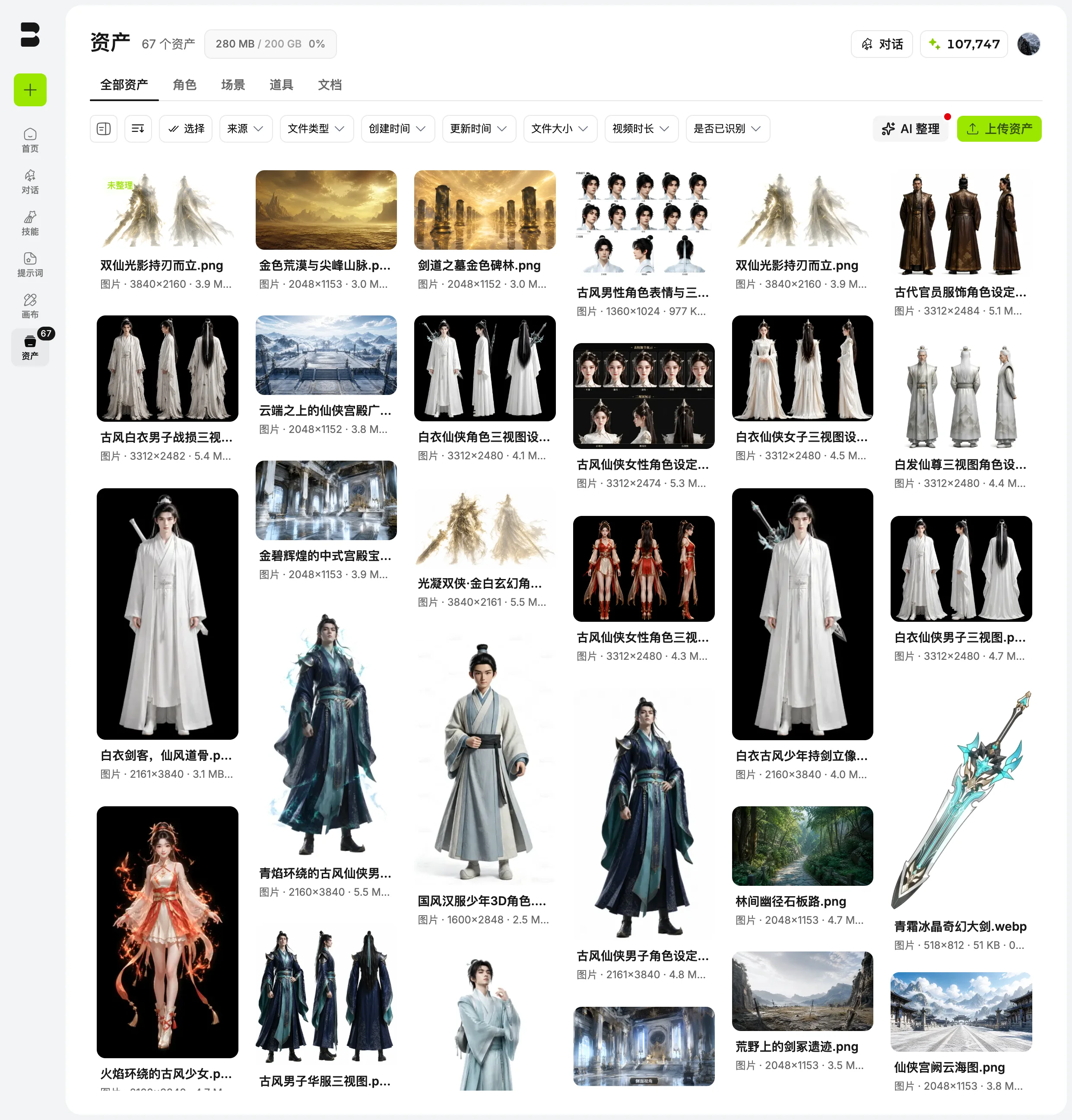
筛选值得长期保存和复用的数字资产。Keep the digital assets worth finding and reusing.
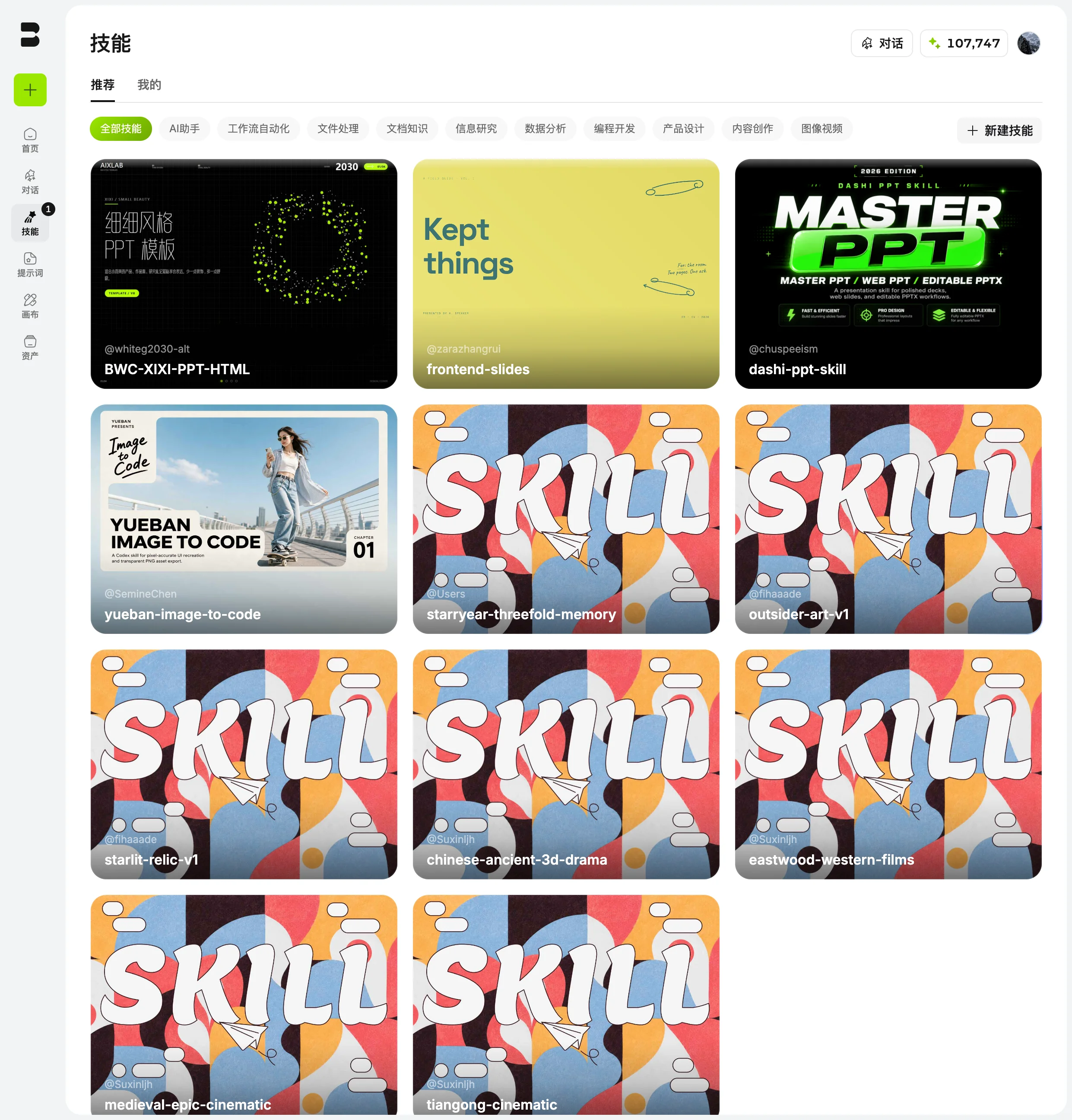
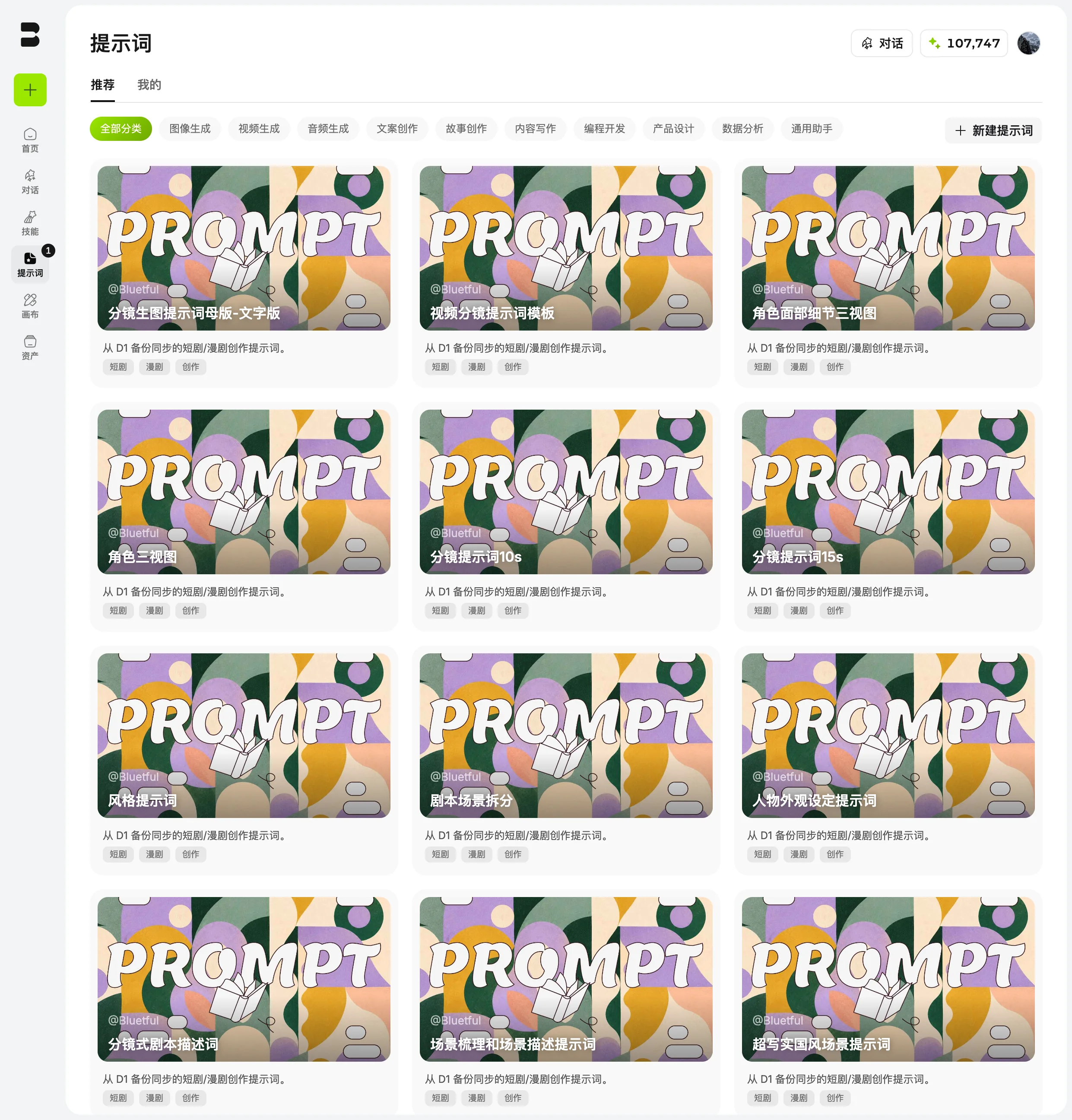
用 Prompts 与 Skills 留住创作的方法。Preserve the methods behind the work with Prompts and Skills.
项目状态 / 持续开发中PROJECT STATUS / IN ACTIVE DEVELOPMENT
当 AI 工具越来越多,创作过程反而变得越来越分散。As AI tools multiplied, my creative process became more scattered.
Bluetful 最初的想法,来自我尝试使用 AI 制作短剧的经历。
一部 AI 短剧需要经历多个环节:剧本编写、分镜设计、角色设定、场景生成、图片制作,再到视频生成。
我当时使用了不少工具,包括 ChatGPT、Prompt Hub、Infinite Canvas,以及即梦、Lib TV、小云雀等 AI 创作平台。
每个工具都能够完成流程中的一部分,但当这些步骤组合起来时,我逐渐发现一个问题:
创作内容散落在不同的平台里,很难建立连续、可追溯的工作流程。
剧本可能保存在聊天记录中,人物参考图存放在本地文件夹,生成图片使用的提示词又散落在其他平台。
当我需要重新生成某个镜头、调整角色形象,或者复用之前的提示词时,往往需要在不同应用之间反复查找。
这让我产生了一个想法:
能不能把这些创作过程放在同一个地方,让内容之间的关系得以保留,也让已经完成的创作能够继续被利用?
这成为 Bluetful 的起点。
The idea for Bluetful came from trying to make an AI short film. That process involved writing a script, planning shots, defining characters, generating scenes and images, and finally making video.
I used ChatGPT, Prompt Hub, Infinite Canvas, Jimeng, Lib TV, Xiaoyunque and other tools. Each handled one part of the work, but together they left the process fragmented. A script might live in a chat, character references in a local folder, and prompts on another platform.
Regenerating a shot, adjusting a character or reusing a prompt meant searching across several apps. I began asking whether the process could live in one place, where relationships between materials survived and finished work could remain useful. That question became Bluetful's starting point.
我希望 AI 创作拥有一个可以自由组织的空间。I wanted a space where AI creation could be arranged freely.
早期尝试中,我接触到了 Infinite Canvas 这样的画布工具。
相比将内容全部堆叠在一条对话记录中,画布可以将不同的素材、提示词和生成结果放在各自的位置,再通过节点之间的关联表达创作关系。
这种方式更加符合我对多步骤 AI 创作的理解。
例如,制作一个 AI 短剧镜头时,可能需要同时参考人物设定、场景图片和镜头提示词。
这些内容并不总是严格的先后关系。它们可能需要反复调整、相互引用,甚至从某个中间步骤重新生成。
如果这些信息被放在一条很长的聊天记录中,查找和修改都会逐渐变得困难。
而在画布里,我可以直接看到当前有哪些内容、它们如何关联,以及哪些结果值得继续使用。
因此,我决定从一张无限画布开始开发 Bluetful。
Early experiments with Infinite Canvas showed me an alternative to a long conversation history. A canvas can place materials, prompts and generated results in different locations, then show how they relate through connections.
An AI film shot may depend on a character design, a scene image and a camera prompt at once. These are not always linear steps. They may be adjusted repeatedly, refer to one another, or restart from the middle.
In a long chat, finding and changing that context grows difficult. On a canvas, I can see what exists, how things connect and what is worth taking forward. I therefore began Bluetful with an infinite canvas.
从一个节点开始,逐步构建完整的创作流程。Build a creative flow, one node at a time.
Canvas 是 Bluetful 最早开发的核心模块。
我首先建立了画布的基础操作,包括平移、框选、多选、节点拖拽、连线和工具栏。
随后,逐渐将 AI 生成能力整合到节点体系中。
在画布里,节点不再只是展示一张图片或一段文字。
它还可以承载生成所需的提示词、模型配置、参数与其他上下文信息。
用户能够在画布中组织不同类型的内容,并通过节点之间的关系,将一个个独立的生成步骤组合起来。
后来,我又探索了更加专业的图像创作能力,例如图片打光、多角度生成、全景图和导演台。
这让画布从早期的内容组织工具,逐渐发展为能够承载多模态创作流程的工作空间。
我希望 Bluetful 的画布能够逐步支持更多创作类型。
除了文字、图片、视频、音频等内容,还包括文档、演示文稿,以及未来更加复杂的交互式创作产物。
画布的意义不局限于拥有无限大的工作区域,更在于它能够持续扩展新的创作方式。
Canvas was the first core module. I built the basics: panning, marquee selection, multiselection, dragging nodes, connections and a toolbar. Then I began integrating AI generation into the node system.
A node can hold more than an image or text. It can also carry the prompt, model settings, parameters and context used to create a result. Different content types can be organized and connected into a larger workflow.
I later explored more specialized image features, including relighting, multi-angle generation, panoramas and a director's desk. The canvas grew from a content organizer toward a workspace for multimodal creation.
I want the canvas to support text, images, video and audio, as well as documents, presentations and more complex interactive work in the future. Its value lies not only in infinite space, but in the ability to expand to new kinds of creation.
当工作台拥有越来越多功能,我希望 AI 能够帮助用户使用这些功能。As the workspace gained features, I wanted AI to help people use them.
随着画布、资产库和提示词等模块逐渐完善,我开始思考另一个问题:
如果用户仍然需要手动打开每一个模块、寻找每一项操作,那么 AI 工作台的价值是否还能进一步提高?
于是,Bluetful 开始加入 AI Agent。
最初是基础对话与工具调用,后来逐步扩展到技能调用、模型路由、会话管理,以及对部分工作台资源的操作。
我的目标是让 Agent 能够理解用户的任务,并在获得适当授权的情况下,调用工作台内已有的能力。
例如,用户可以通过对话查找资产、整理内容或调用某个 Skill。
开发过程中,我也逐渐认识到,让 AI 执行操作与让 AI 生成内容存在明显区别。
读取资料与删除资料的风险不同,普通整理操作与不可逆操作也需要不同的确认方式。
因此,我为 Agent 的工具执行引入了分级确认机制,并探索如何在执行效率与用户控制之间取得平衡。
我希望 Agent 能够减少重复操作,同时让用户理解和控制关键的执行过程。
As the canvas, asset library and prompt modules took shape, I wondered whether people should still have to open every module and find every command themselves. Bluetful therefore began adding an AI Agent.
It started with conversation and tool calls, then expanded toward Skills, model routing, session management and operations on some workspace resources. The goal is for the Agent to understand a task and, with appropriate authorization, use the workspace's existing capabilities. Someone might ask it to find an asset, organize content or run a Skill.
Generating content and performing actions carry different risks. Reading material is different from deleting it, and irreversible operations need a different kind of confirmation. I introduced tiered confirmation for tool execution and continue exploring the balance between efficiency and user control. The Agent should reduce repetitive work while keeping important actions understandable and controllable.
生成了很多内容之后,怎样才能真正把它们利用起来?After generating so much content, how can we actually use it again?
在最早的设计中,资产库只是画布里的一个抽屉,用来选择和管理需要使用的素材。
随着创作功能逐渐增加,我发现资产的管理与检索需要一个更加独立的空间。
于是,资产库逐渐成为 Bluetful 的核心模块之一。
用户可以在其中保存和管理图片、视频以及支持的文档等内容,通过分类、文件夹、筛选和搜索整理数字资源。
后来,我进一步加入了 AI 元数据、自动标签、摘要和语义检索等能力。
用户不必完全记住某张图片的名称,也可以尝试通过描述内容来寻找相关资产。
在这一阶段,我做过一个重要的产品取舍。
画布中可能会产生大量临时结果,例如测试图片、不同参数下的生成版本,或者仅供某个任务使用的中间内容。
如果所有内容都自动进入资产库,资产数量可能迅速膨胀,增加后续管理成本。
因此,我将画布中的创作内容与资产库中的持久资产区分开来。
用户可以在画布中自由探索,而只有主动选择保留的内容,才进入资产库成为长期管理和复用的资源。
这一设计也逐渐形成了 Bluetful 的核心工作逻辑:
创作 → 筛选 → 沉淀 → 检索 → 复用。
The asset library began as a drawer in the canvas. As creation features grew, asset management and search needed a space of their own. It became one of Bluetful's core modules.
People can save and manage images, video and supported documents, and organize them with categories, folders, filters and search. I later added AI metadata, automatic tags, summaries and semantic retrieval, so someone can look for an asset by describing it rather than remembering its filename.
A canvas can produce many temporary results: test images, versions made with different settings and intermediate material for one task. Sending all of them into the asset library would create more long-term management work.
I separated exploratory canvas content from persistent assets. People can experiment freely, then choose what to keep. This became a central product loop: create → select → preserve → retrieve → reuse.
除了保存生成结果,我也希望能够保存生成它的方法。The result matters, but so does the way it was made.
在使用 AI 的过程中,很多有价值的内容其实并不是最终生成的图片或文档,而是一段经过反复调整的提示词,或者一套能够重复执行的操作方法。
因此,Bluetful 逐步建立了独立的 Prompt 和 Skill 管理体系。
Prompt 用来保存和组织可以重复使用的提示词。
Skill 则用于承载更加结构化的能力,让 Agent 在执行任务时能够使用特定的方法和工具。
这些内容可以被管理、检索和复用,并进一步融入 Agent 工作流。
对我来说,保存创作成果是一部分,保存创作过程中的知识和方法同样重要。
A refined prompt or a repeatable procedure can be more valuable than a single generated image or document. Bluetful therefore developed separate management for Prompts and Skills.
Prompts store reusable instructions. Skills carry more structured capabilities that an Agent can use for particular methods and tools. Both can be managed, searched, reused and brought into Agent workflows. I want to preserve creative knowledge alongside the output.
当 AI 功能真正成为产品的一部分,还需要解决模型、成本和使用规则。An AI product also needs clear rules for models, costs and usage.
Bluetful 最初只是服务于个人需求的工具。
但随着 Agent、画布生成和资产管理逐渐完善,我开始尝试将它发展为一个有账号、云端存储和商业化能力的 SaaS 产品。
在这个过程中,我需要面对一些以前很少接触的产品问题。
不同 AI 模型具有不同的能力、参数和调用成本。用户如何选择模型?任务开始前如何估算费用?任务失败后应该怎样处理已经预留的额度?
为了让这些规则更加统一,我逐步建立了模型注册表,并让画布和 Agent 使用同一套模型能力配置。
同时,我设计了基于 Credits 的计量体系,将模型使用、订阅权益、积分余额、任务预算和消耗记录组织起来。
积分系统后来经历了多次重构,包括任务预留、实际结算、退款返还以及不同有效期积分的管理。
这部分工作让我开始从产品整体运行的角度思考 AI 服务,而不仅仅关注生成界面的设计。
Bluetful began as a personal tool. As its Agent, canvas generation and asset management evolved, I began turning it into a SaaS product with accounts, cloud storage and commercial capabilities.
Different models have different capabilities, parameters and costs. How should a person choose one? How should a task's cost be estimated in advance? What happens to reserved credits if it fails? I introduced a model registry so canvas and Agent features can share one description of model capabilities.
I also designed a Credits system for model usage, subscription benefits, balances, task budgets and consumption records. It has been rebuilt several times to handle reservations, final settlement, refunds and credits with different expiration dates. This work pushed me to think about how the whole AI service runs, beyond the generation interface.
很多创作素材,来自用户正在浏览和使用的其他应用。Inspiration often arrives in other apps.


即使 Bluetful 已经有了资产库,用户仍然可能在浏览器、AI 工具或即时通讯应用中发现新的素材与灵感。
如果每次都需要手动下载、整理、再重新上传,工作流程仍然存在明显的中断。
因此,我开始为 Bluetful 开发 Connect 能力。
其中包括浏览器扩展 Bluetful Connect,以及飞书机器人相关的素材导入功能。
浏览器扩展围绕网页图片采集、提示词管理和跨网站使用等场景展开,让用户能够在原有浏览环境中收集内容。
飞书集成则探索通过对话消息收集图片、视频和文件,并将它们导入 Bluetful。
我希望 Bluetful 能够逐渐连接更多内容来源,但不要求用户为了使用它而放弃原有的工具。
Even with an asset library, people still discover materials in browsers, AI tools and messaging apps. Downloading, sorting and uploading each item by hand interrupts the flow. I started building Connect to bridge that gap.
Bluetful Connect is a browser extension exploring image collection from web pages, prompt management and use across websites. A Feishu bot explores importing images, video and files from conversations. I want Bluetful to connect more content sources without asking people to abandon their existing tools.
Bluetful 并不是一开始就拥有现在这些功能。Bluetful did not begin with all of its current modules.
从 2026 年 7 月开始,它经历了多次明显的产品形态变化。
July 2026 — 从画布开始
建立本地画布原型,逐步加入 AI 生成、节点操作和素材处理能力。
August 2026 — 从画布走向工作台
引入云端账号、独立资产库、Agent、语义搜索,以及更加完整的多模态创作能力。
这一时期,也开始探索订阅与模型配置。
September 2026 — 从功能走向产品体系
完善模型管理、Credits、订阅和 Agent 运行机制,并开始构建创作广场、创作者身份与内容发布体系。
October 2026 — 从工作台延伸到外部环境
继续完善内容治理、媒体处理和产品运营能力,同时开发浏览器扩展与飞书连接器。
整个过程里,一部分功能不断扩展,也有一些早期方案被删除或重新设计。
例如,我曾尝试将工具箱、Inbox 和 Task 作为独立模块,但后来逐步收敛产品对象,让主要功能围绕画布、Agent 与资产展开。
Bluetful 的演进并不是简单地不断增加功能。随着需求变化,我也持续调整它的信息架构、交互方式和系统边界。
July 2026 — Start with the canvas. A local canvas prototype gained AI generation, node interactions and media handling.
August 2026 — Grow into a workspace. Cloud accounts, an independent asset library, an Agent, semantic search and broader multimodal creation arrived. I also began exploring subscriptions and model configuration.
September 2026 — Build a product system. Model management, Credits, subscriptions and Agent execution matured, alongside experiments with a creator identity, publishing and a creation community.
October 2026 — Reach beyond the workspace. Work continued on content governance, media processing and operations, plus the browser extension and Feishu connector.
Some features expanded while early ideas were removed or redesigned. I once explored Toolbox, Inbox and Task as separate modules, then narrowed the main product objects around canvas, Agent and assets. Its evolution has meant revisiting the information architecture, interactions and system boundaries, not simply adding features.
本地原型、节点操作、AI 生成与素材处理。Local prototype, nodes, AI generation and media handling.
云端账号、资产库、Agent、语义搜索与多模态创作。Cloud accounts, assets, Agent, semantic search and multimodal creation.
模型管理、Credits、订阅与 Agent 运行机制。Models, Credits, subscriptions and Agent execution.
浏览器扩展、飞书连接器与内容运营能力。Browser extension, Feishu connector and content operations.
当一个产品能够做越来越多事情,它也容易变得越来越复杂。A product that can do more can also become harder to understand.
这是我开发 Bluetful 时反复面对的问题。
在早期阶段,我尝试过很多功能和界面组织方式。随着模块数量增加,导航、设置、资源管理和操作入口都开始面临复杂度上升的问题。
后来,我逐渐围绕几个设计原则调整产品。
围绕核心工作流组织功能
画布承担可视化创作,Agent 负责理解和执行任务,资产库管理值得长期保存的内容。
Prompt 和 Skill 则为这些流程提供可以重复利用的能力。
让自动化保持可控
对于不同风险的操作,提供不同的确认方式,减少低风险操作的重复打扰,同时保留关键操作的用户控制权。
避免功能无限扩张
不是所有功能都需要成为独立的一级页面。
例如,浏览器扩展与飞书连接属于 Connect 能力,可以通过设置进行管理,而不必占据一个主要工作台入口。
区分创作内容与持久资产
用户可以自由地尝试、生成和修改内容,但不需要为每一个临时结果承担长期管理成本。
这些取舍,逐渐帮助我明确了 Bluetful 的产品结构。
I tried many ways of organizing Bluetful. As modules multiplied, navigation, settings, resources and actions all became more complex. A few principles now guide the structure.
Organize around the core flow. Canvas supports visual creation, Agent understands and carries out tasks, and the asset library manages what is worth keeping. Prompts and Skills make methods reusable across the flow.
Keep automation controllable. Use different confirmation levels for different risks, avoiding repetitive prompts for low-risk work while retaining control over consequential actions.
Resist endless expansion. Not every capability needs a top-level page. The browser extension and Feishu integration, for example, can live under Connect settings.
Separate creation from lasting assets. People should be free to try, generate and revise without having to manage every temporary result forever. These decisions continue to clarify Bluetful's structure.
我希望画布能够承载的不只是 AI 图片生成。I want the canvas to hold more than AI image generation.
随着对产品的思考越来越深入,我逐渐明确了 Bluetful 更长期的方向:
一个由画布体系支撑,连接 AI 创作、办公内容生产和数字资产管理的工作台。
例如,未来如果让 Agent 帮助用户制作一份 PPT,我希望用户不仅能看到最终的演示文稿,还能在需要时查看资料、内容结构、配图与排版等中间步骤。
如果只需要修改其中一页,用户应该能够调整局部内容,而不必重新开始整个任务。
对于这类复杂产物,我正在探索一种复合任务节点的设计。
画布中的一个 PPT 节点,可以承载一个能够展开的内部工作流。用户需要时查看具体过程,完成后则得到可以继续编辑的文档产物。
这样的设计方向,还可以逐步延伸到文档、图片、视频以及更多内容类型。
这是 Bluetful 接下来希望持续验证的方向,而不是已经全部完成的功能。
The longer-term direction is a canvas-based workspace linking AI creation, office content and digital asset management. If an Agent helps create a presentation, I want someone to see the sources, structure, illustrations and layout behind it, not only the final deck. Editing one slide should not require restarting the entire task.
I am exploring a composite task node: a presentation node on the canvas that can expand to reveal its internal workflow and ultimately yield an editable document. The same direction could extend to documents, images, video and more. This remains a direction to test, not a set of completed features.
这个项目让我第一次持续地从产品、设计与工程多个角度思考同一个问题。This project has made me think continuously across product, design and engineering.
Bluetful 最初只是因为我想做 AI 短剧,却发现创作工具和素材过于分散。
于是我开始设计画布,后来又增加资产库、Agent、提示词与 Skills。
当我尝试把它变成真正的 SaaS 产品时,又需要考虑账号体系、云端存储、模型成本、订阅计费、用户权限、内容审核和系统稳定性。
这些工作让我意识到,一个完整的软件产品,需要解决的问题远多于界面和功能本身。
借助 AI 辅助开发,我能够更快地将设计想法转化为实际程序,并通过不断试用、调整和重构来验证方案。
但开发速度的提升,也让一些问题更早暴露出来,例如功能膨胀、状态管理复杂、系统模块之间的耦合,以及为了快速实现功能而产生的技术负担。
因此,我也开始尝试使用更加明确的需求文档、开发规范、自动化测试和技术审计来管理项目。
Bluetful 仍在持续开发中,部分功能尚未完善或正式开放,也还没有足够的真实用户数据来证明所有产品假设。
但通过这个项目,我已经能够持续实践从需求发现、产品定位、交互设计,到前端实现、后端服务和商业化机制的一整套产品开发过程。
对我来说,Bluetful 是 AI时代的数字创作中心。
Bluetful began with a personal need to make an AI short film without losing materials across tools. I built a canvas, then added assets, Agent, Prompts and Skills. Moving toward SaaS also brought accounts, cloud storage, model costs, subscriptions, permissions, content moderation and reliability into view.
AI assisted development helped me turn ideas into working software more quickly and test them by using, revising and rebuilding them. Greater speed also surfaced problems sooner: feature sprawl, complex state, coupling between modules and technical debt from rapid implementation.
I have started using clearer requirements, development standards, automated tests and technical audits to manage that work. Bluetful is still in active development; some capabilities are unfinished or not publicly available, and there is not yet enough real user data to validate every assumption.
For me, Bluetful is a digital creation hub for the AI era.